 Admin
Admin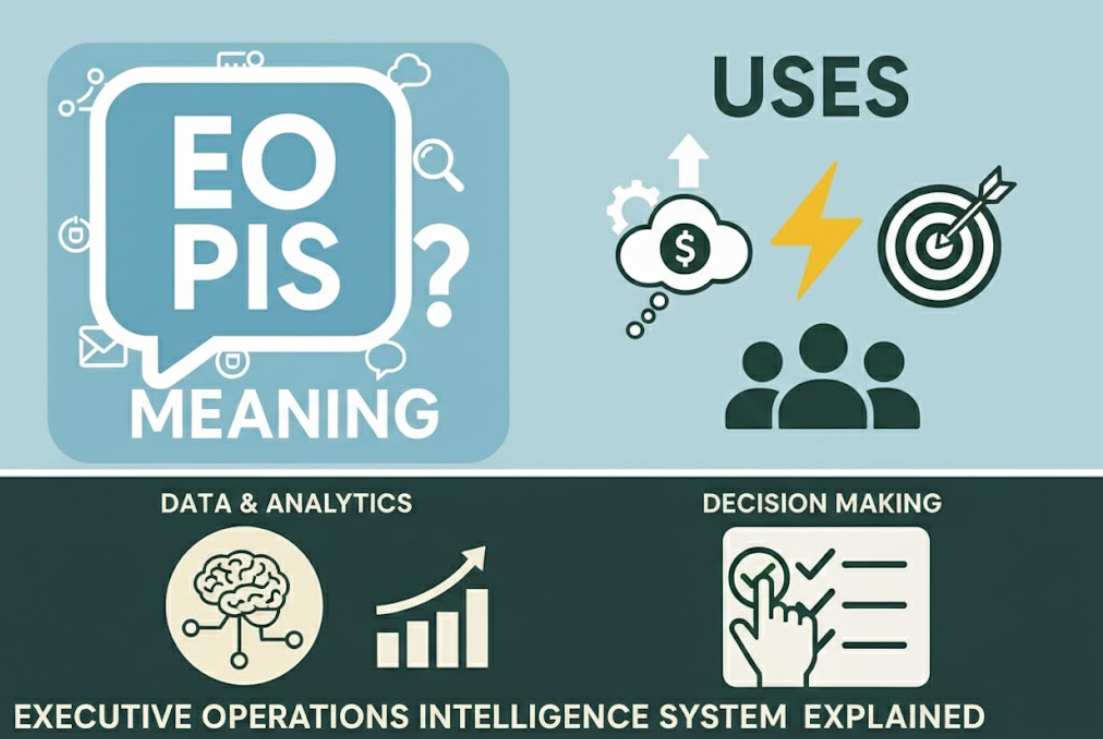
Introduction: Why EO Pis Is Redefining Executive Decision-Making
In today’s hyper-competitive and data-saturated business landscape, executives face a critical challenge: too much data, but not enough clarity. Traditional dashboards, siloed KPIs, and delayed reports often fail to provide the real-time, strategic intelligence leaders need. This is where EO Pis emerges as a game-changing solution.
EO Pis, short for Enterprise Operations Performance Information System, is a modern executive intelligence framework designed to deliver a single, unified view of organizational performance. Instead of monitoring isolated metrics, EO Pis integrates operational, financial, marketing, and sales data into a centralized intelligence layer aligned directly with executive objectives.
As we move deeper into 2025 and beyond, organizations operating in complex, fast-moving environments require more than static KPIs. EO Pis enables leadership teams to act faster, think strategically, and align daily execution with long-term vision—making it a cornerstone of modern enterprise management.
What Are EO Pis? (Executive Operations Performance Information System)
EO Pis represents a strategic evolution in performance measurement. Rather than focusing on departmental metrics alone, EO Pis delivers enterprise-wide operational intelligence tailored for executive decision-making.
At its core, EO Pis:
- Aligns executive objectives with real-time performance data
- Converts raw operational information into actionable insights
- Bridges strategy and execution across the organization
- Supports agile leadership in dynamic market conditions
Unlike traditional reporting systems, EO Pis is not just about measurement—it is about interpretation, foresight, and action.
Understanding EO Pis at an Executive Level
EO Pis vs Traditional KPIs
| Aspect | EO Pis | Traditional KPIs |
|---|---|---|
| Scope | Enterprise-wide | Department-specific |
| Focus | Strategic objectives | Operational targets |
| Adaptability | High and flexible | Often fixed |
| Data Type | Real-time & predictive | Historical |
| Decision Use | Executive strategy | Operational monitoring |
While KPIs answer “What happened?”, EO Pis answers “What should we do next?”
Why EO Pis Matters in 2025
Modern enterprises operate in environments shaped by:
- Rapid digital transformation
- AI-driven competition
- Volatile markets
- Customer experience expectations
- Cross-functional complexity
EO Pis addresses these challenges by offering real-time clarity, allowing executives to detect performance shifts early, adjust strategies faster, and maintain alignment across the organization.
Core Components of EO Pis
1. Real-Time Data Integration
EO Pis aggregates data from multiple sources including:
- ERP systems
- CRM platforms
- Financial systems
- Marketing analytics
- Supply chain software
This eliminates reporting silos and ensures executives work from a single source of truth.
2. Customizable Executive Metrics
Every organization has unique priorities. EO Pis allows leadership teams to define metrics that reflect:
- Growth objectives
- Profitability targets
- Customer satisfaction goals
- Operational efficiency benchmarks
This customization ensures relevance without sacrificing strategic alignment.
3. Automated Analytics and Insights
EO Pis leverages automation to:
- Detect anomalies
- Identify performance trends
- Surface strategic risks
- Highlight growth opportunities
Executives no longer need to interpret raw data—EO Pis does it for them.
How EO Pis Works in Practice
EO Pis operates through a structured intelligence workflow:
- Data Collection – Real-time ingestion from enterprise systems
- Data Normalization – Cleansing and structuring information
- Analytics Engine – AI-powered analysis and modeling
- Executive Dashboards – Visual, decision-ready insights
- Strategic Action – Faster, data-backed leadership decisions
This cycle continuously updates, ensuring leadership always operates with current and reliable intelligence.
The Role of AI and Machine Learning in EO Pis
Artificial intelligence is the backbone of modern EO Pis systems.
AI Capabilities in EO Pis
- Pattern recognition across massive datasets
- Predictive performance modeling
- Scenario simulations for strategic planning
- Automated alerts for performance deviations
Machine learning enables EO Pis to improve over time, learning from historical data and executive behavior to refine insights continuously.
Benefits of EO Pis for Executive Leadership
1. Faster Decision-Making
Real-time insights eliminate delays caused by manual reporting and fragmented data sources.
2. Strategic Alignment Across Teams
EO Pis ensures every department operates in alignment with executive priorities, reducing miscommunication and inefficiency.
3. Improved Resource Allocation
By highlighting what truly drives performance, EO Pis helps leaders allocate budgets, talent, and time more effectively.
4. Enhanced Organizational Agility
Executives can pivot strategies quickly in response to market changes, competitive threats, or internal performance signals.
Implementing EO Pis Successfully
Step 1: Define Executive Objectives Clearly
Before implementation, leadership must identify:
- Core strategic goals
- Success benchmarks
- Decision-making priorities
EO Pis should reflect what matters most, not everything that can be measured.
Step 2: Engage Stakeholders Early
Successful adoption requires buy-in from:
- Executive leadership
- Department heads
- Data and IT teams
Transparency and collaboration reduce resistance and accelerate adoption.
Step 3: Invest in Data Infrastructure
Real-time intelligence depends on:
- Clean data pipelines
- System integration
- Scalable analytics platforms
Without strong infrastructure, EO Pis cannot deliver full value.
Challenges in EO Pis Adoption
Despite its advantages, EO Pis implementation comes with challenges:
Cultural Resistance
Teams accustomed to traditional KPIs may resist change.
Data Quality Issues
Incomplete or inconsistent data undermines insights.
Technology Complexity
Integration across legacy systems can be demanding.
Overcoming these challenges requires executive sponsorship, patience, and continuous refinement.
Leveraging EO Pis for Long-Term Strategic Success
Predictive Insights for Future Planning
EO Pis enables leaders to:
- Forecast revenue trends
- Anticipate operational bottlenecks
- Identify emerging customer behaviors
This predictive capability transforms strategy from reactive to proactive.
Collaboration and Transparency
Modern EO Pis platforms include collaboration tools that:
- Share insights across leadership teams
- Improve transparency
- Break down organizational silos
This alignment strengthens execution across the enterprise.
Industry Use Cases of EO Pis
EO Pis is adaptable across industries, including:
- Manufacturing: Operational efficiency and supply chain intelligence
- Retail: Customer demand forecasting and inventory optimization
- Healthcare: Resource utilization and service performance
- Finance: Risk management and profitability tracking
- Technology: Product performance and growth metrics
Its flexibility makes EO Pis relevant to organizations of all sizes.
Future Outlook: The Evolution of EO Pis
The future of EO Pis is closely tied to advancements in:
- Artificial intelligence
- Real-time analytics
- Predictive modeling
- Executive experience design
As enterprises increasingly adopt data-driven leadership models, EO Pis will evolve into a standard executive operating system, not just a reporting framework.
External Authoritative References (Suggested)
- McKinsey – Data-driven decision-making
- Harvard Business Review – Executive analytics
- Gartner – Enterprise performance management
- MIT Sloan – AI strategy and leadership
Conclusion: Why EO Pis Is the Future of Executive Intelligence
EO Pis represents a fundamental shift in how organizations measure, interpret, and act on performance data. By unifying enterprise-wide intelligence, leveraging AI-driven analytics, and aligning execution with strategy, EO Pis empowers executives to lead with confidence in an increasingly complex world.
Organizations that embrace EO Pis today position themselves for greater agility, smarter decisions, and sustained competitive advantage tomorrow.
If your enterprise is still relying on fragmented KPIs, now is the time to evolve. EO Pis is not just a system—it is a strategic mindset.
FAQs
Is EO Pis suitable for small and mid-sized enterprises?
Yes. EO Pis frameworks can be scaled based on organizational size and complexity.
Does EO Pis replace KPIs?
No. EO Pis integrates and elevates KPIs within a strategic executive intelligence layer.
How long does EO Pis implementation take?
Implementation timelines vary but typically range from 3–9 months depending on infrastructure readiness.
For More Update Visit: Fortunes